Lunar Phase: Waxing Crescent (10%)
Q-Day: 2
Moonrise: 8:02 AM. Moonset: 11:40 PM
Sunrise: 5:29 AM Sunset: 9:03 PM
Stars Identified: Castor, Dubhe, Merak, Mizar-Alcor, Pollux
Location: Home
Date: 2026-06-17
Time: 9:15 PM - 10:25 PM ADT
Equipment: Naked eye, Canon 10x42 IS binoculars
Magnification: x10
Transparency: Good (3)
Seeing: Good (3)
Temperature: 17º C
Stars Identified: Alcor-Mizar, Alioth, Alkaid, Arcturus, Asellus Australe, Asellus Borealis, Castor, Dubhe, Merak, Megrez, Phecda, Pollux,Spica.
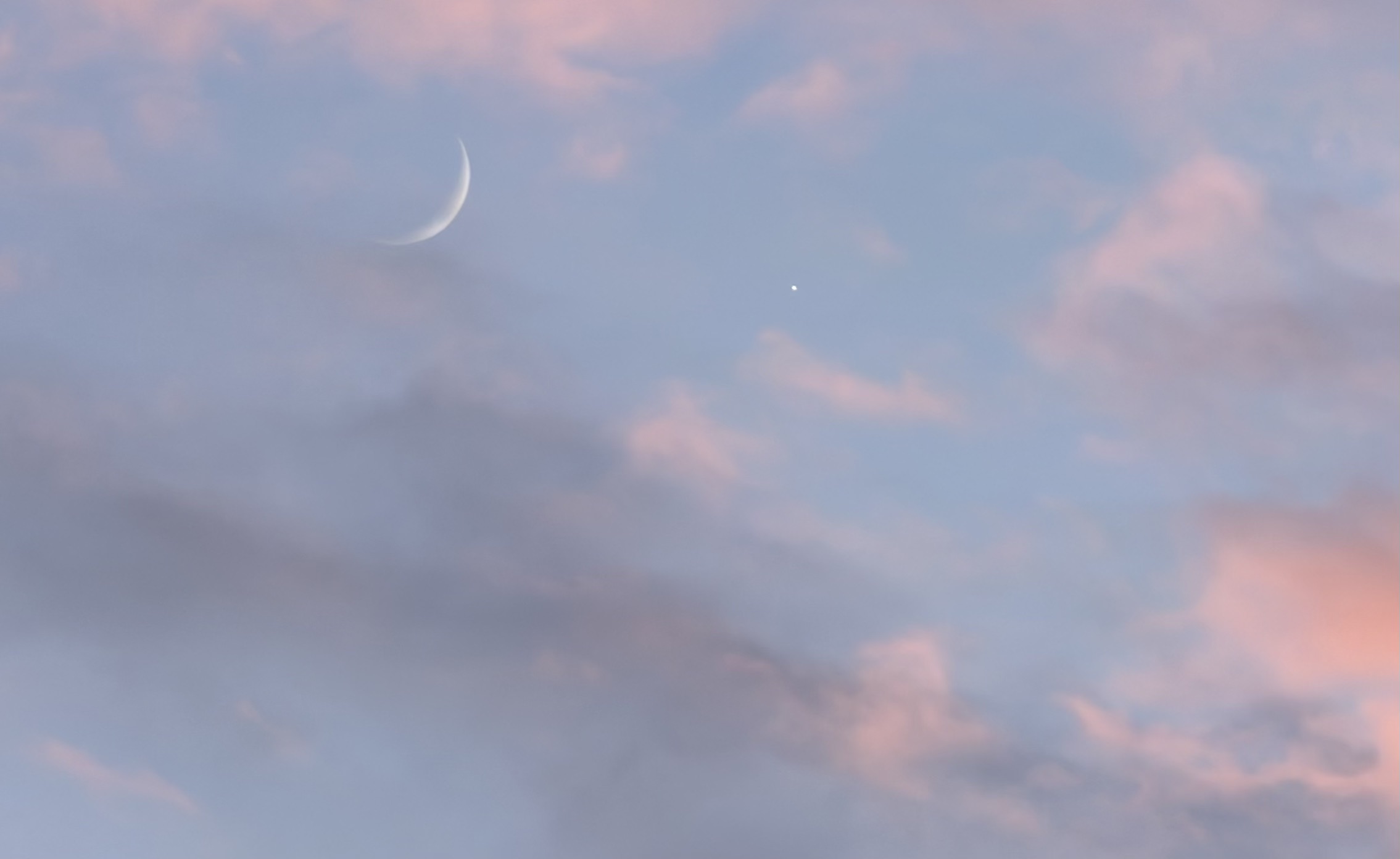 |
The Moon and Venus were easy to find naked eye. However, I had my Canon 10x42 IS binoculars with me and had a wonderful view of our bright Moon.
8:58:04 PM ADT
ISO 40
200 mm
f2.8
1/179 s.
|
|
|
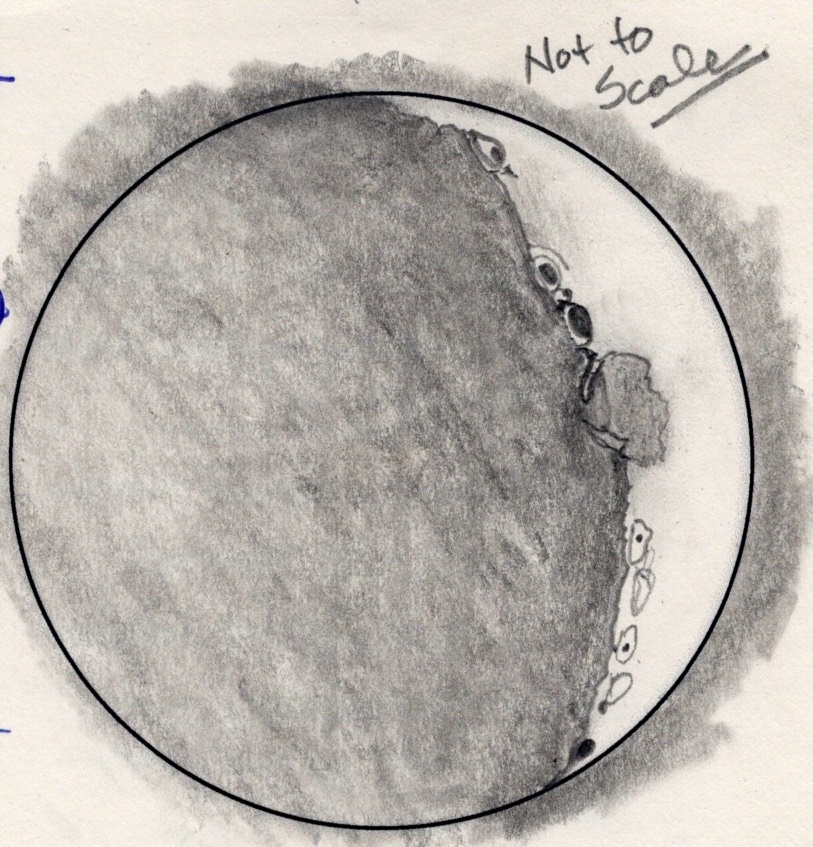
Time: 9:31 PM ADT What a beautiful view of the 10% illuminated Moon! The Group of 4 (Langrenus, Vendelinus, Petavius, Furnerius) were quite evident just inside the line of the southern terminator.
What was interesting was Mare Crisium - the western portion that was past the terminator was fully visible but shadowed, and what was really cool was the western wall was highly illuminated even past the terminator! But it wasn’t a solid semi-circle of light. The lit portion broke in the middle, perhaps in the area of the crater Yerkes where that part of the wall is perhaps lower(?).
Cleomedes was evidenced as a dark crater above the Mare with Burkhardt, Geminus (with Bernoulli beside it) and Messala in a line going northward. Endymion was the crater in the upper most narrow part of the lunar crescent.
|
|
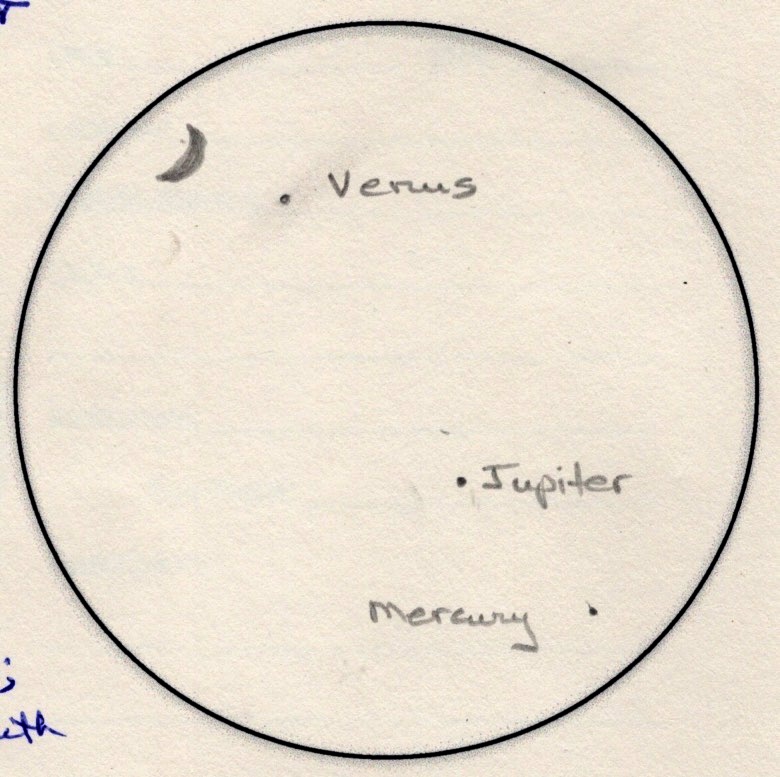
Time: 9:36 PM ADT A few minutes after completing the above observation, I drew this one. Although all three planets were in essence in a straight line from the Moon, Jupiter was just slightly south of the line. |
|
|
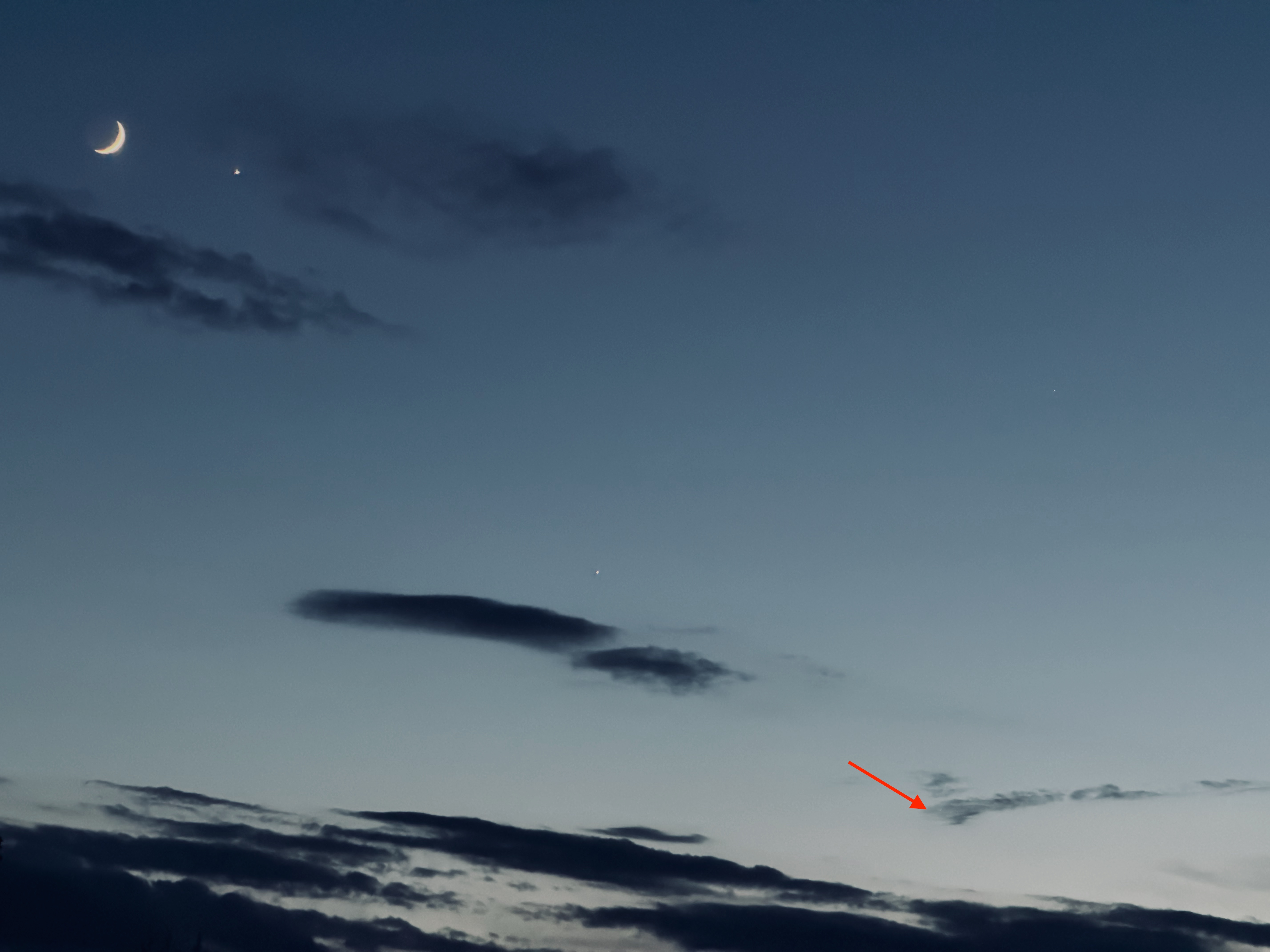
Moon, Venus, Jupiter, Mercury
Mercury is just inside the fluffiness of that cloud.
9:46:37 PM ADT
ISO 1600
100 mm
f2.8
1/35 s.
|
 |
|
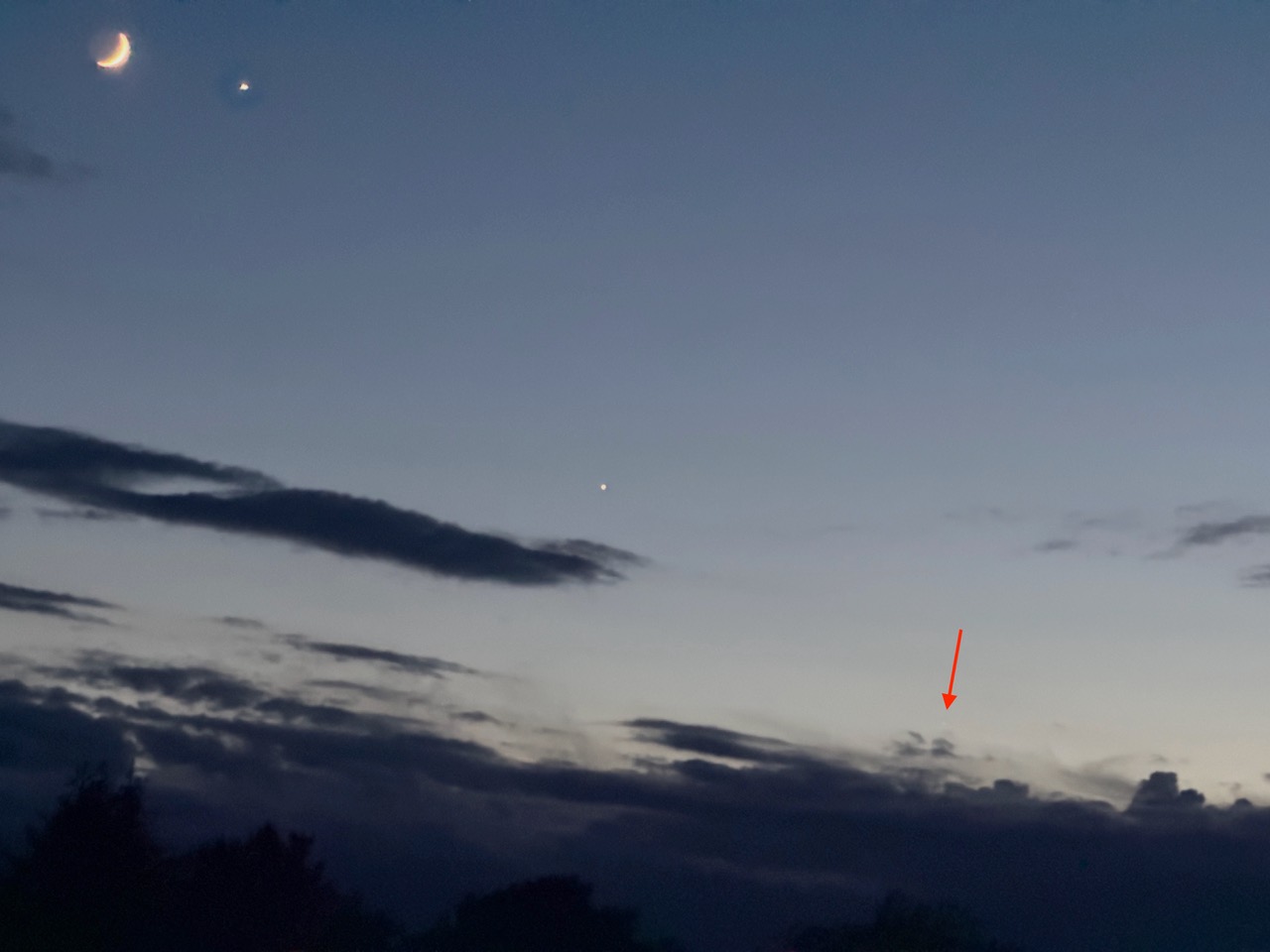
Moon, Venus, Jupiter, Mercury
Mercury is just above that little fluff ball of a cloud.
9:53:30 PM ADT
ISO 2000
100 mm
F2.8
1/30 s
|
 |
|
Time: 9:55 PM ADT
Equipment: Canon 10x42 IS Binoculars Mercury had disappeared in the approaching clouds. Earthshine was quite evident at this point. In between and through some of the lighter clouds, I was able to identify Castor and Pollux.
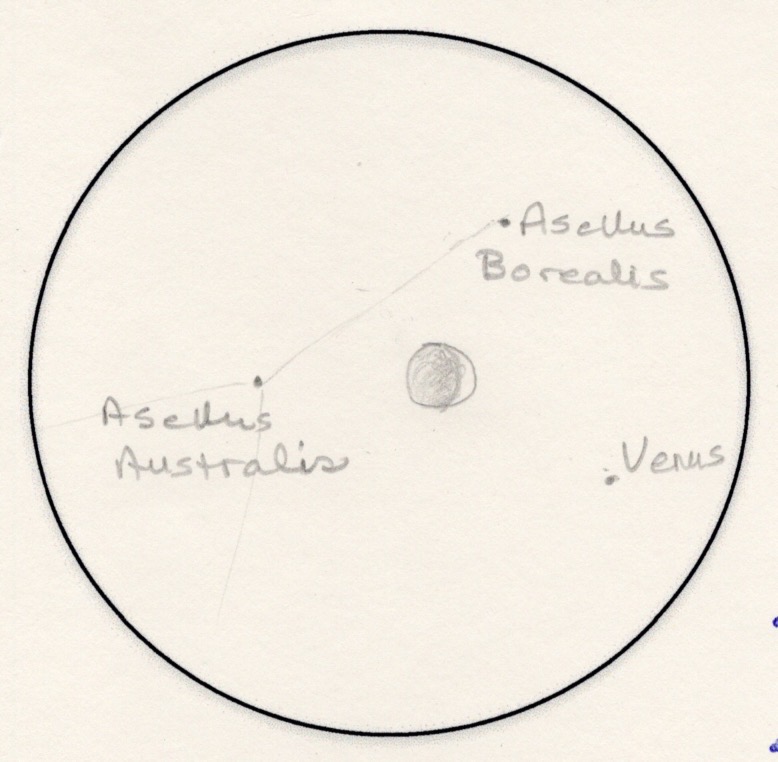
Unfortunately, the clouds covered all 4 astronomical delights before it was dark enough to see the Beehive Cluster (M44). However, Cancer’s Asellus Australis and Asellus Borealis were visible before the clouds moved in.
Clouds completely covered the viewing field around 10:20 PM ADT.
|
|