 See the Sun. See the Seestars set up. |
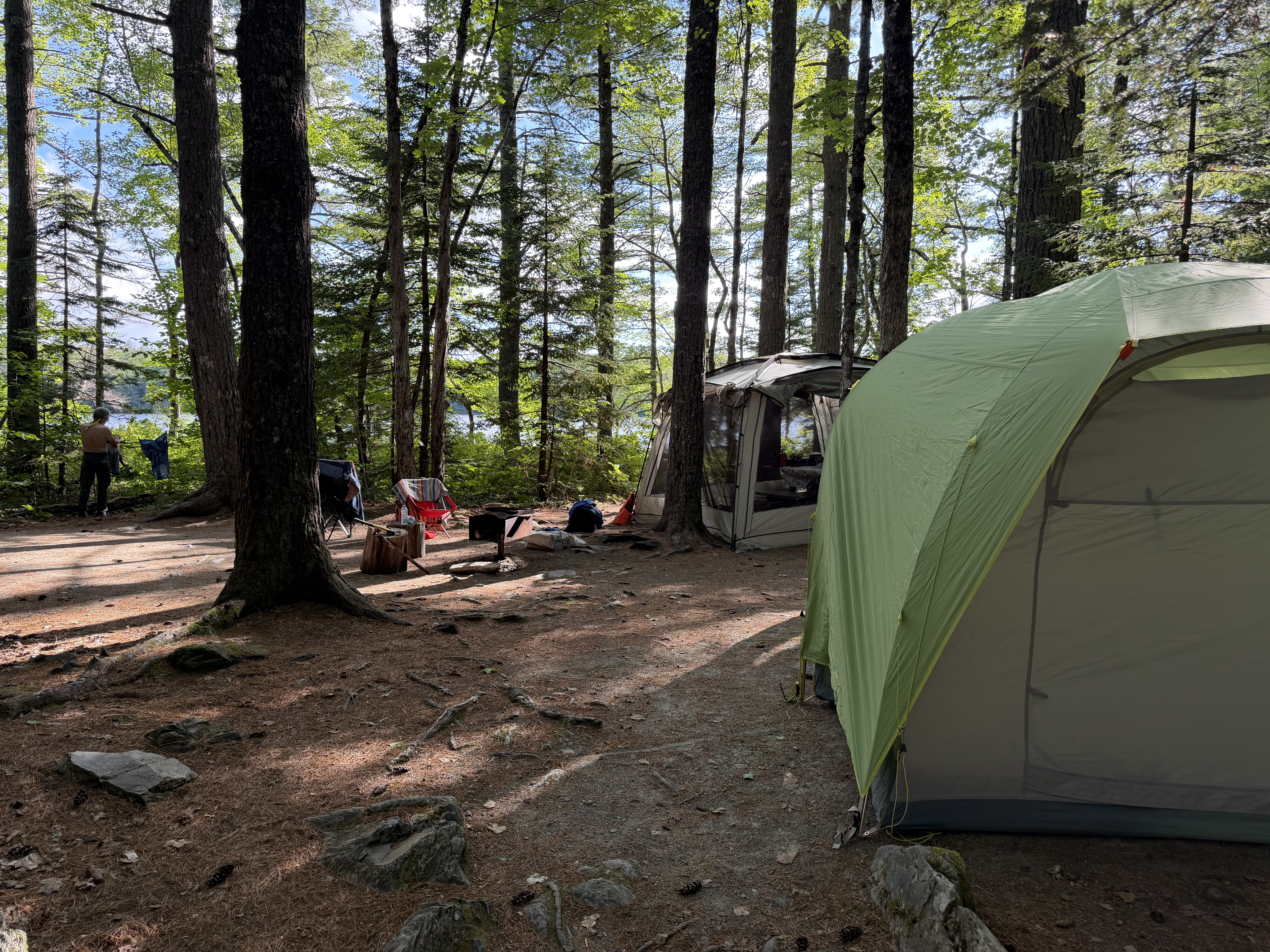 Home sweet home |
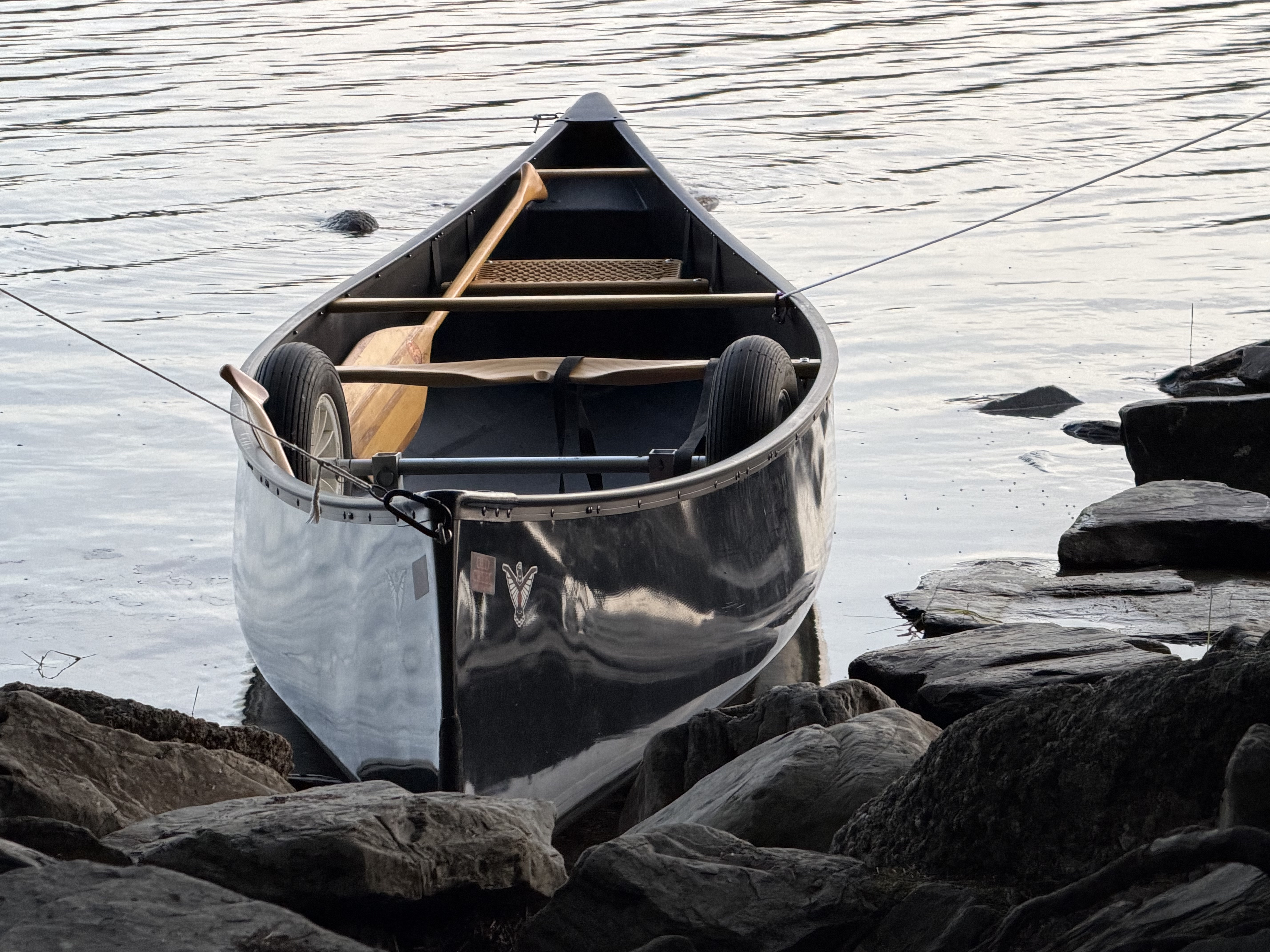 Reflections of water on one side, rocks on the other |
Asterisms: Keystone of Hercules, Teapot
Clusters: Coma Star Custer
Constellations: Capricornuis (partial), Coma Berenices, Ophiuchus, Scorpius, Serpens Caput, Serpens Cauda, Virgo
Planets: Venus
Stars: Alnasi (γ Sgr), Alniyat (σ Sco), Alya (θ1 Serpentis), Antares (α Sco), Ascella (ζ Sgr), Auva (δ Virginis), μ Herculis, ζ Herculis, Heze (ζ Virginis), Kaus Australis (ε Sgr), Kaus Borealis, Kaus Media (or Meridionalis) (δ Sgr), η Leo, Nehushain (ξ Serpentis), Marfik (λ Oph), Nunki (σ Sgr), Paikauhale (τ Sco), Porrima (γ Virginis), Regulus, Sabik (η Oph), δ Serpentis, β Serpentis, γ Serpentis, κ Serptentis, μ Serpentis, ε Serpentis, η Serpentis, τ Sgr, φ Sgr, Spica, Unukalhai (α Serpentis), Vindemiatrix (ε Virginis), Yed Posterior (ε Oph), Yed Prior (δ Oph), Zavijava (β Virginis)
Messier: M4, M6 (Butterfly Cluster), M7 (Ptolemy's Cluster), M8 (Lagoon Nebula) M10, M11 (Wild Duck Cluster), M12, M13 (Hercules Globular Cluster), M20 (Triffid Nebula), M22
Location: Site 1, Kejimkujik National Park & National Historic Site
Date: 2026-07-08-09
Time: 9:45 PM - 1:30 AM ADT
Equipment: Visual, Canon 10x42 IS binoculars, iPhone 13 Pro Max
Seeing: Excellent!
Transparency: Excellent!
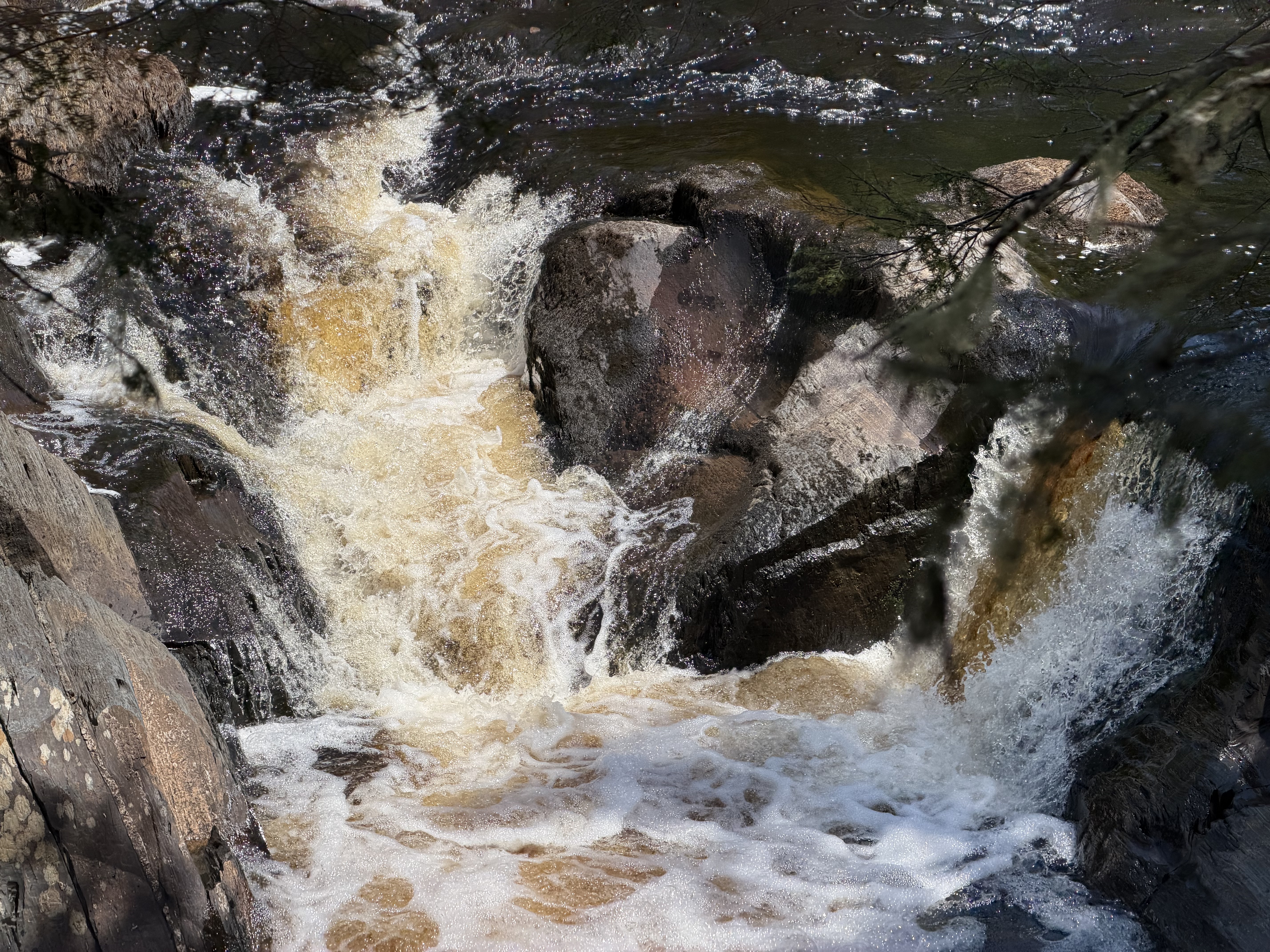 |
This was a trip Jerry and I took to the back country of Kejimkujik National Park & National Historic Site. After registering for the backcountry site, we headed to Mills Falls (left) to enjoy our lunch at a picnic table just a little downstream from the falls. There were people swimming there - the first time in all the years we have visited Kejimkujik that anyone has been swimming. Mind you, it was not spring high water; the falls wasn't its spectacular spring flood, and we assume it was 'confortable' to swim in.
|
|
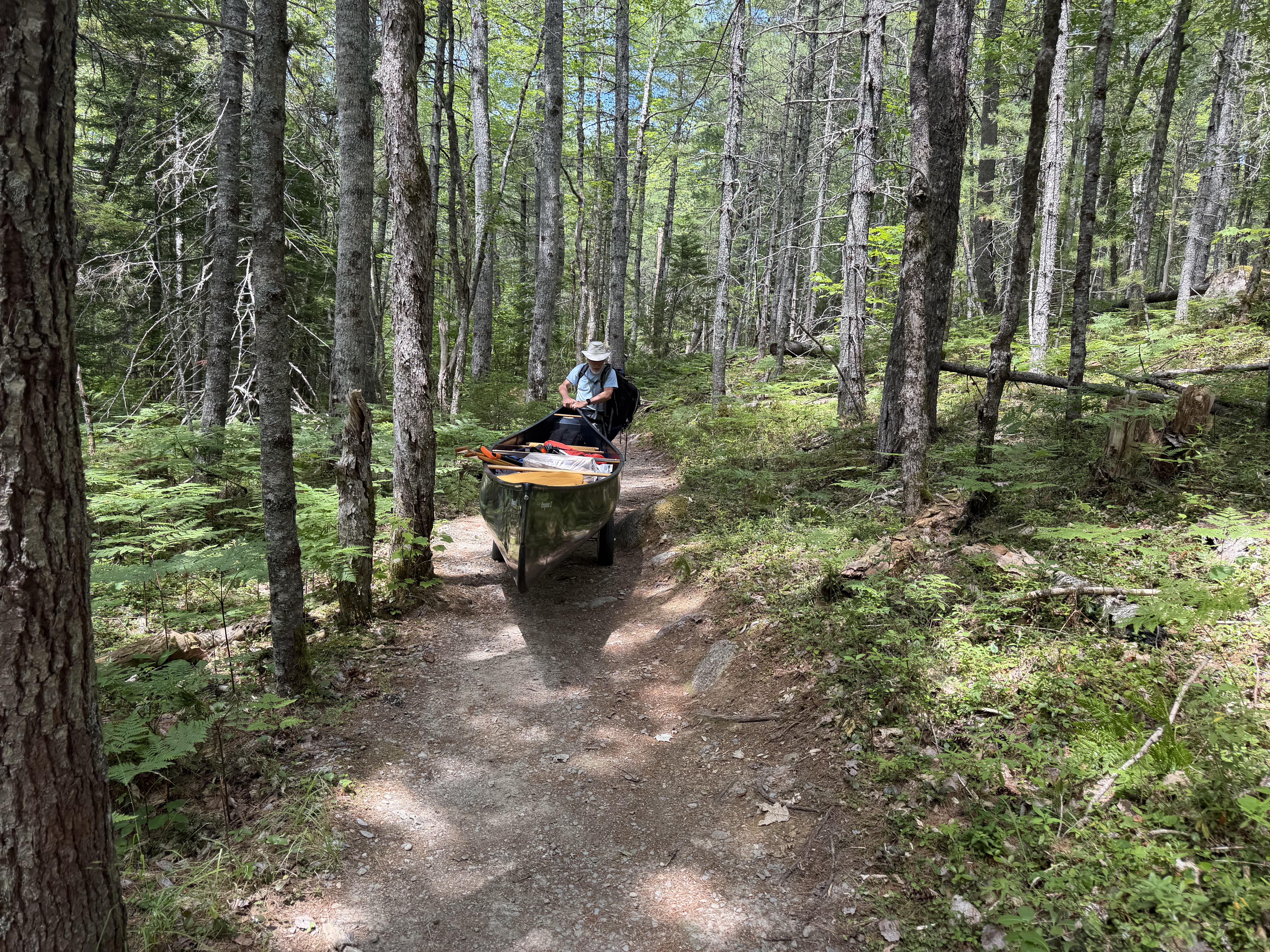 |
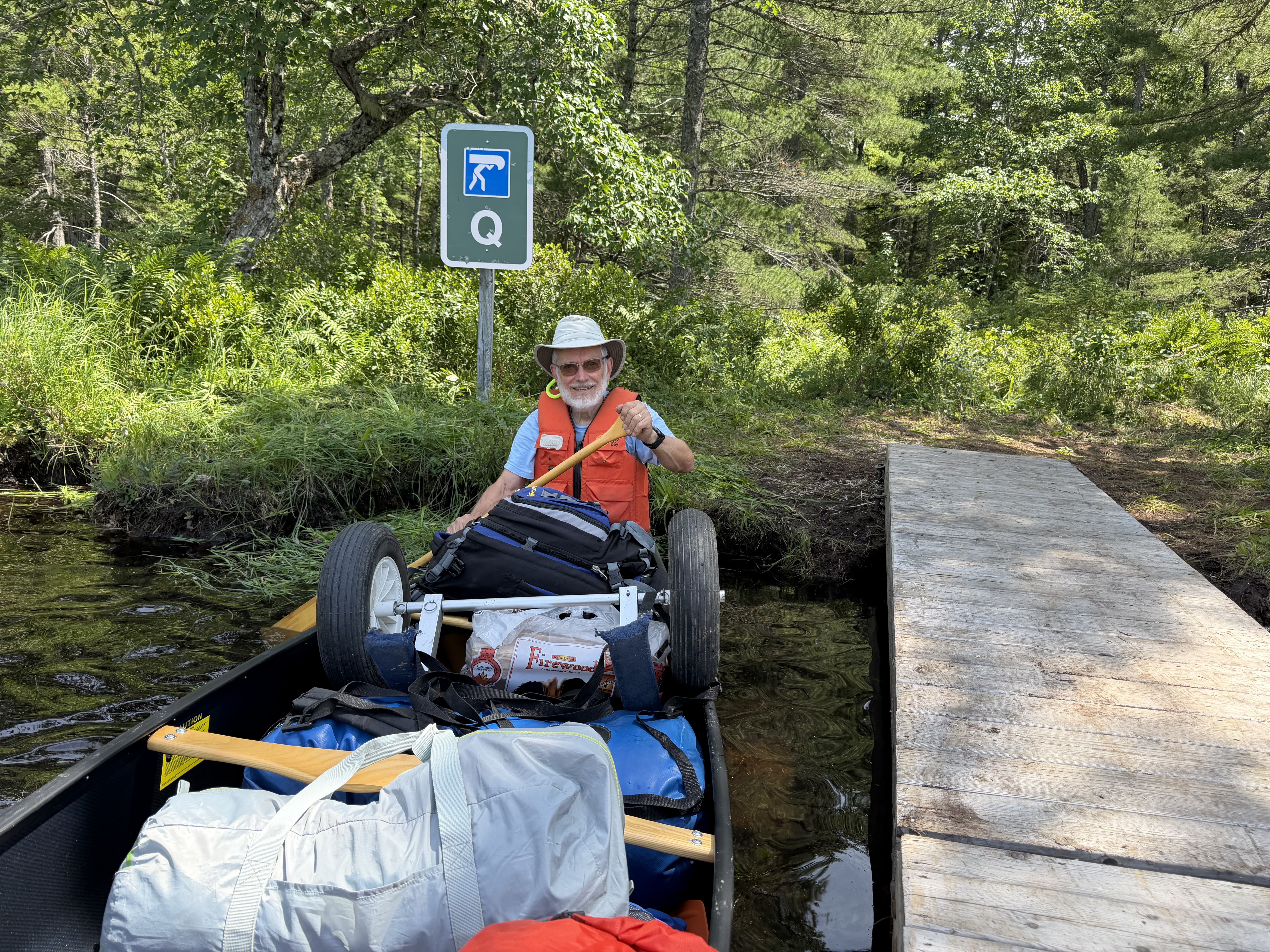
After lunch we headed to the parking lot to access the travers to Q that ends on Big Dam Lake. Jerry loaded the canoe with our gear except for the "cooking" backpack which he carried on his back and I had the clothing & sleeping bags bag. It was then we noticed the wheels under the canoe were not fully inflated. He had a heavy haul! I was somewhat nervous that Travers Q was low water and muddy. Turns out, most of the old dock had been removed and that area cordoned off. The Park had built a new dock - the first section secured to the land and the outer two sections hinged to rise and fall with the water levels. A wonderful change! Then it was paddling to our site. |
|
|
|
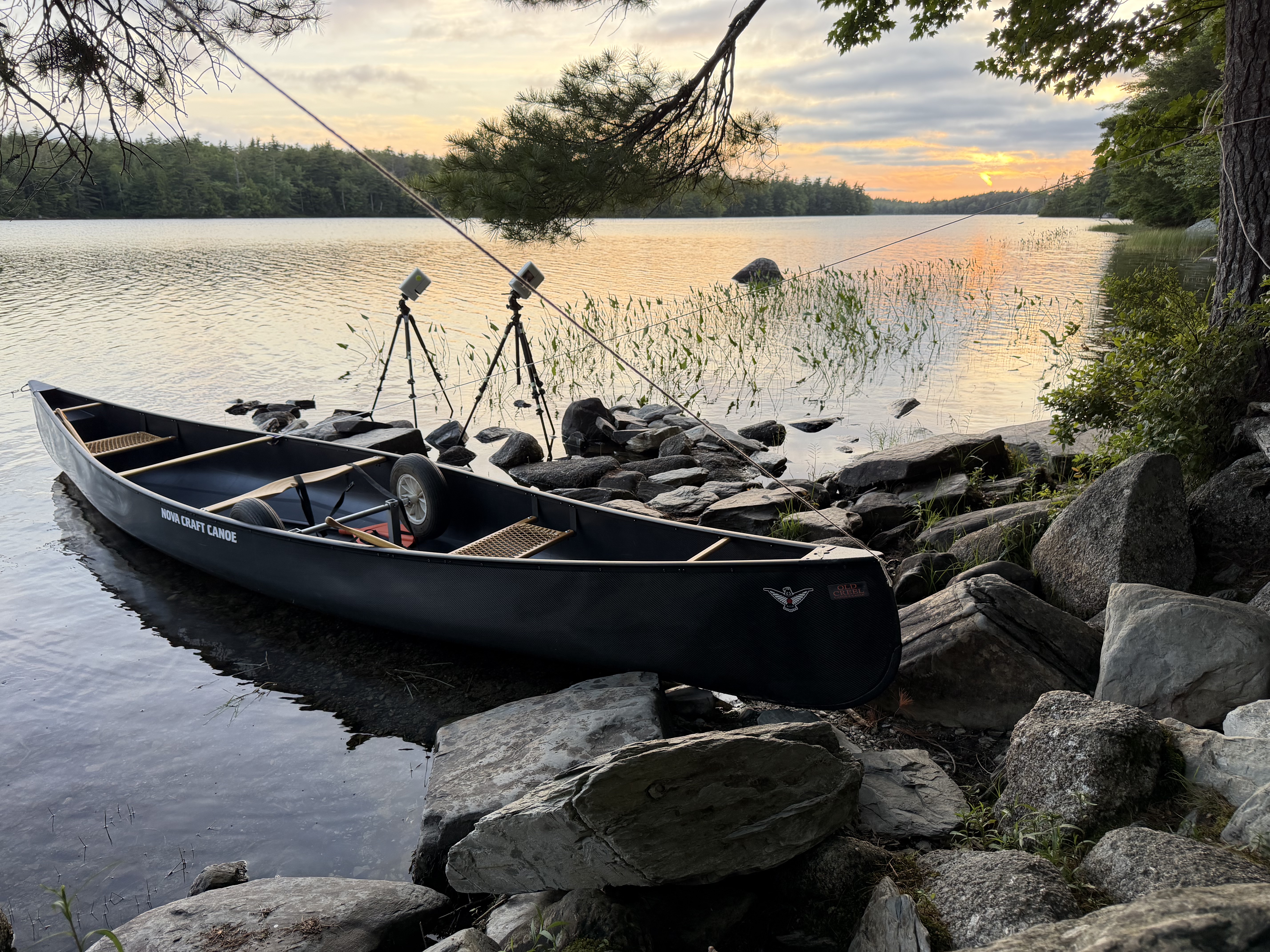
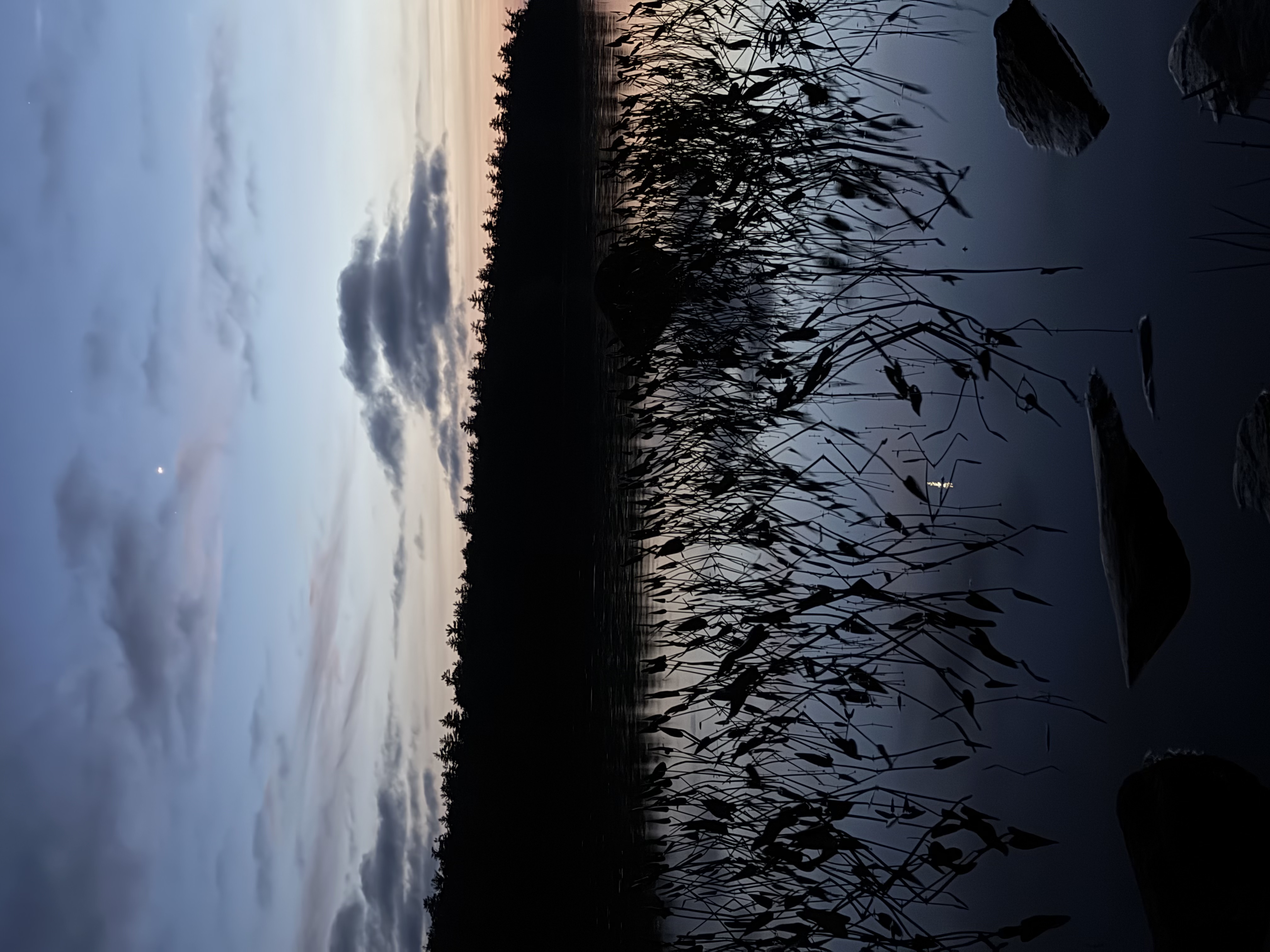
The campsite itself was quite nice. However, the access to it was somewhat challenging. No sand beach - all rocks - and I was a bit anxious entering the site given the rocks that marked the entry but we made it none the worse for wear. Set up camp, had dinner, then contemplated the evening observing session. Jerry set up his two Seestars, their legs on the rocks or in water. I brought my observing bag down. Our view of the daytime sky was initially in clear skies. The occasional clouds moved in late afternoon but they cleared out by 10:10 PM for a spectacular view of the night sky and what it was about to offer. It was still warm at this time, virtually no wind - but LOTS of mosquitoes! 9:50 PM: Tree branches hung over the shore line making it challenging to look up. I stood on the rocks for a while watching as stars appeared in the sky but soon realized this precarious stance wouldn't allow me to safely look up let alone sketch. Jerry suggested I sit in the canoe to be out from under the branches and have a much better 180° view of the horizon. |
 |
|
11:00 PM |
||
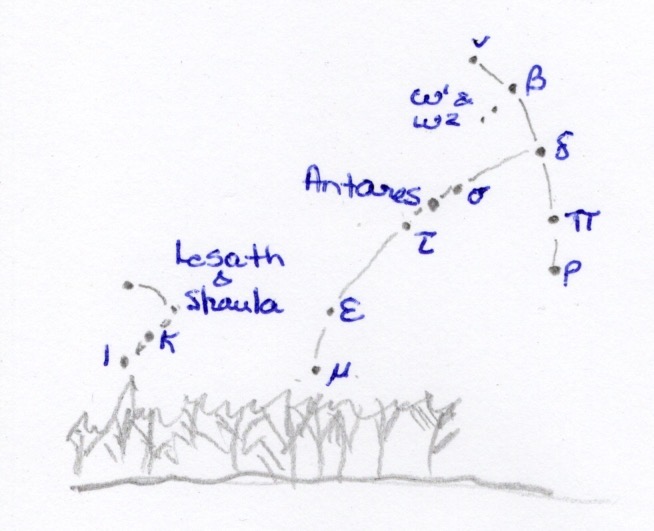 |
11:10 PM All of the brightest stars forming the Teapot in Sagittarius were above the horizon - Kaus Borealis, φ Sgr, Nunki (σ Sgr), τ Sgr, Ascella (ζ Sgr), Kaus Australis (ε Sgr), Kaus Media (or Meridionalis) (δ Sgr) and Alnasi (γ Sgr). Of course, I looked for and easily found M22 near Kaus Borealis, then found M8 (Lagoon Nebula) with its lines of stars and M20 (Triffid Nebula). All were bright and easily found. One of my favourite clusters M7 (Ptolemy's Cluster) along with M6 (Butterfly Cluster) were above the horizon and could visually be seen faintly. Looked at these a few times with binoculars during this observing session. So beautiful with binoculars! It was now while looking at star charts that I realized Libra was adjacent to Scorpius. However, with the skies being so filled with stars, it was difficult to identify the stars in this constellation. |
|
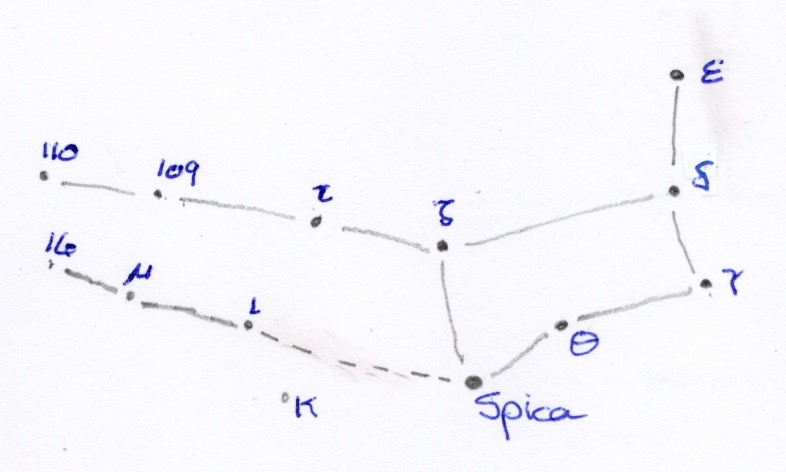 |
11:41 PM Spica (α Virgo) was the first star in Virgo to be located and identified ("from Arcturus, spike to Spica"). I noticed the rectangle with a slight indent on one side; θ Virgo, that created the indent, could be seen faintly with averted vision. There was also two lines of stars going up from the left two of that rectangle. κ Virgo was not seen by me probably because of the two curved relatively parallel lines of stars that captured my eye. It was noted in the sketch but was not actually seen. |
|
|
11:45 PM I showed the two parts of the snake to Jerry and explained the way I remembered which end was "Caput" and which was "Cauda". If you cut off the snake's head (caput), the reptile would be killed. It was kaput, no more. |
||
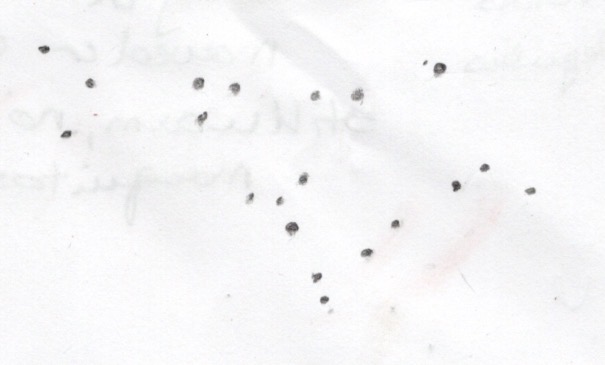 |
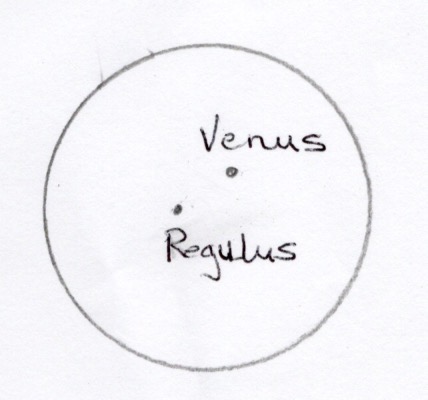
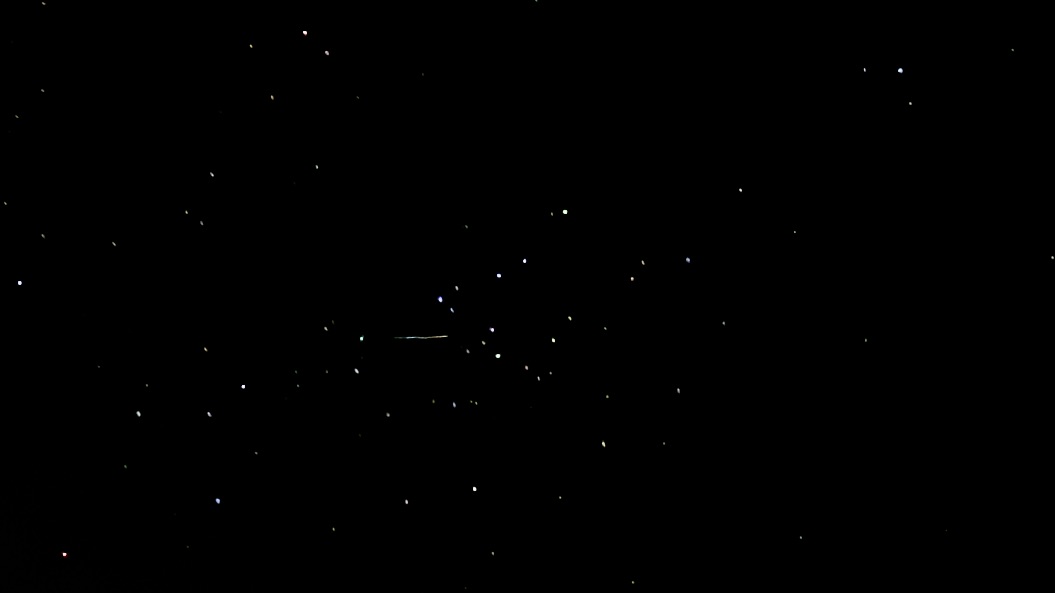
12:03 AM I took a picture of the sky towards Virgo and discovered a cluster of stars that were in sort of an elongated "Y" pattern. Sky Safari Pro helped to identify it as the open cluster in Coma Berenices. Beautiful to see! Sketched a portion of it. |
 |
|
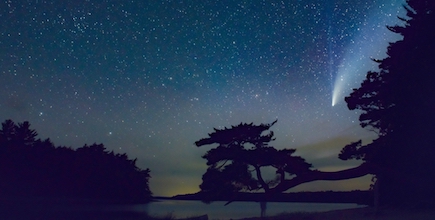
12:29 AM Capricornus was beginning to show its western edge coming past the tree line on our shore. If we were lucky, we hoped to see the comet 10P/Tempel 2 when the dip in the upper line of stars formed by θ Cap and ι Cap appeared. We weren't lucky. |
||
| 12:35 AM The Milky Way was very much in evidence now. There is a semi-circle of stars near the top of the constellation Scutum that I use to find M11; the semi-circle is formed with stars of Aquila and Scutum. M11 (Wild Duck Cluster) was seen as a pretty grey fuzzy golf ball adjacent to a backwards upside-down golf club. Another of my favourites to find. |
||
|
12:40 AM |
||
|
1:11 AM 1:15 AM |
||