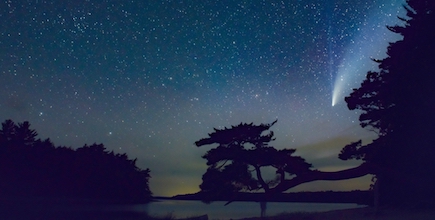
Constellations: Algol, Andromeda, Aquarius, Capricornus, Cassiopeia, Delphinus, Hydra, Lupus, Scorpius
Galaxy: Andromeda
Stars Identified: Albali (ε Aqr), Algedi Prima (α1 Cap), Algedi Secundi (α2 Cap), Alioth, Alkaid, Alpheratz, Alshain (β Aqi), Altair, Antares, μ Aqr, ζ Aqr, θ Aqr, Arcturus, ω Cap, θ Cap, ψ Cap, Dabih (β Cap), Deneb Algedi (δ Cap), Deneb, double ζ Lyrae, double-double ε Lyrae), Hydor (λ Aqr), δ Lyrae, ζ Lyrae, Mirach (β Peg), Mirfak, Mizar-Alcor, Nashira, δ Peg, π Peg, ε Peg, μ Peg, ν Peg, Sadachbia (γ Aqr), Sadalmelik (α Aqr), Sadalsuud (β Aqr), all the stars of Scorpius [including Al Nayat (τ Scorpii), Al Nayat (σ Scorpii), ω1 and ω2 Scorpii)] Spica, Tarazed (γ Aqi), Vega
Date: 2025-07-21
Time: 9:00 PM - 11:45 PM ADT
Equipment: Naked eye, Canon 10x42 IS binoculars
Magnification: x10
Transparency: Excellent (1)
Seeing: Excellent (1)
Temperature: 13° C
SQM: 21.42-21.60
Star map - Scorpius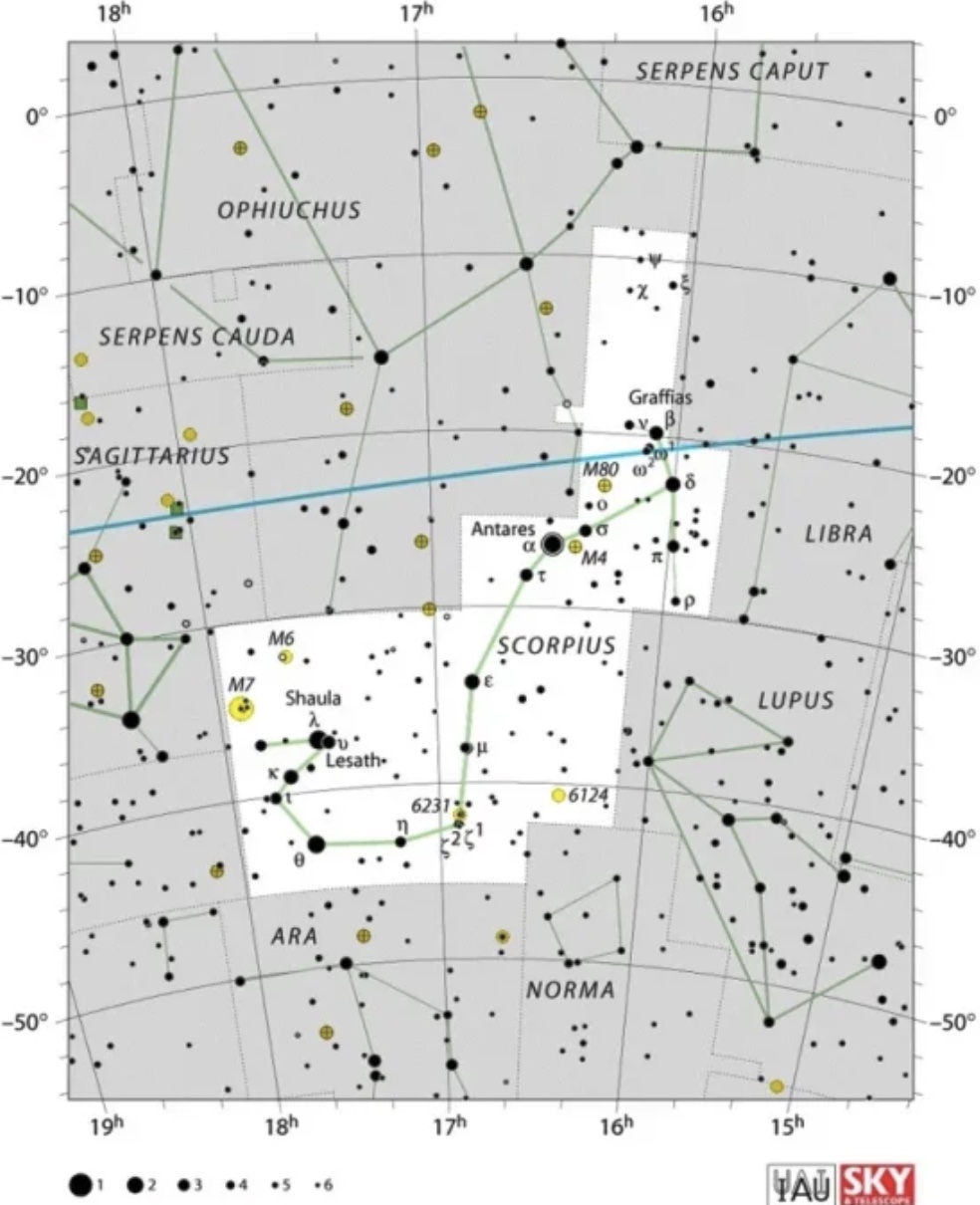 |
Star Map - Capricornus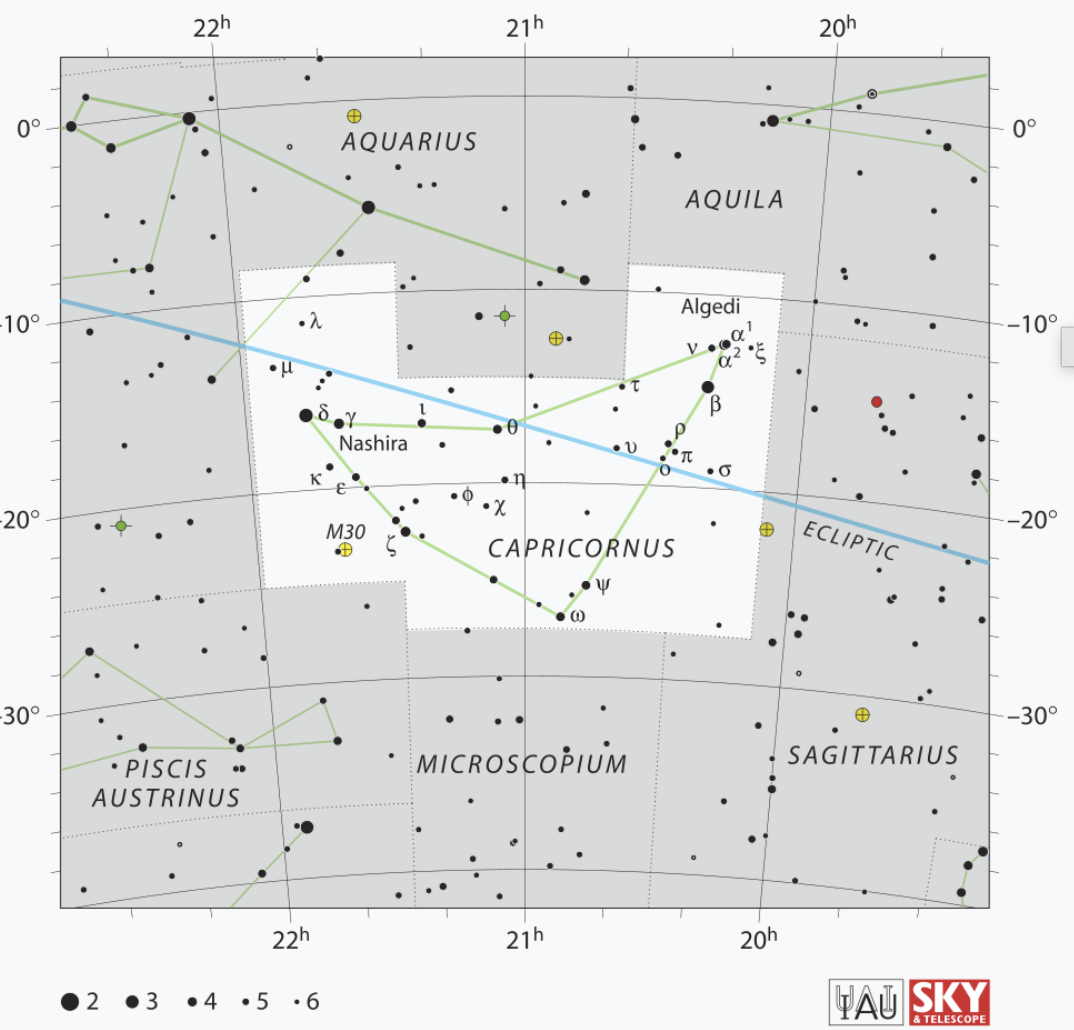 |
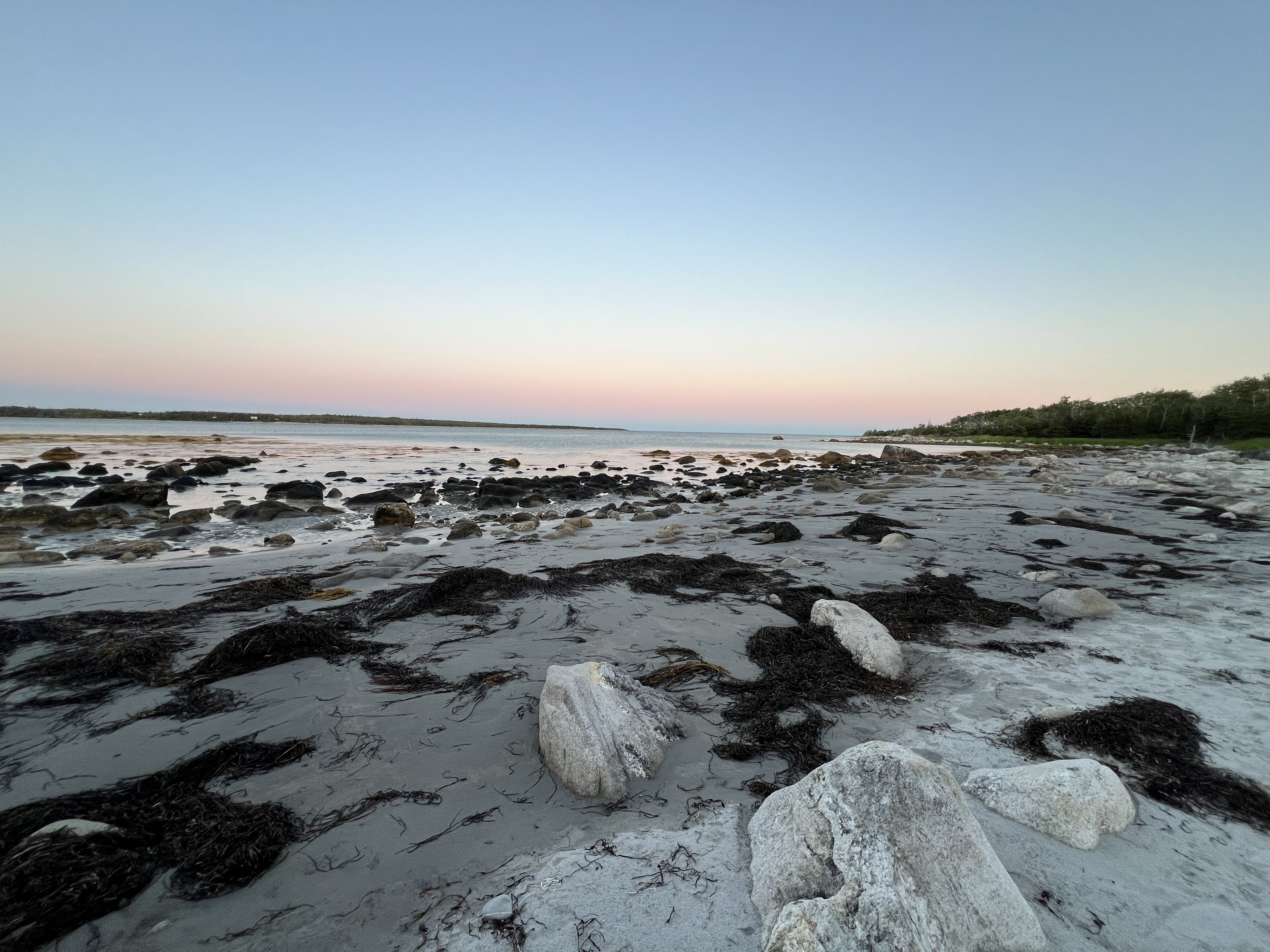 Earth's Shadow and Belt of Venus looking south on the bay at Port Joli |
Southern View - The Teapot, Scorpius, M6, M7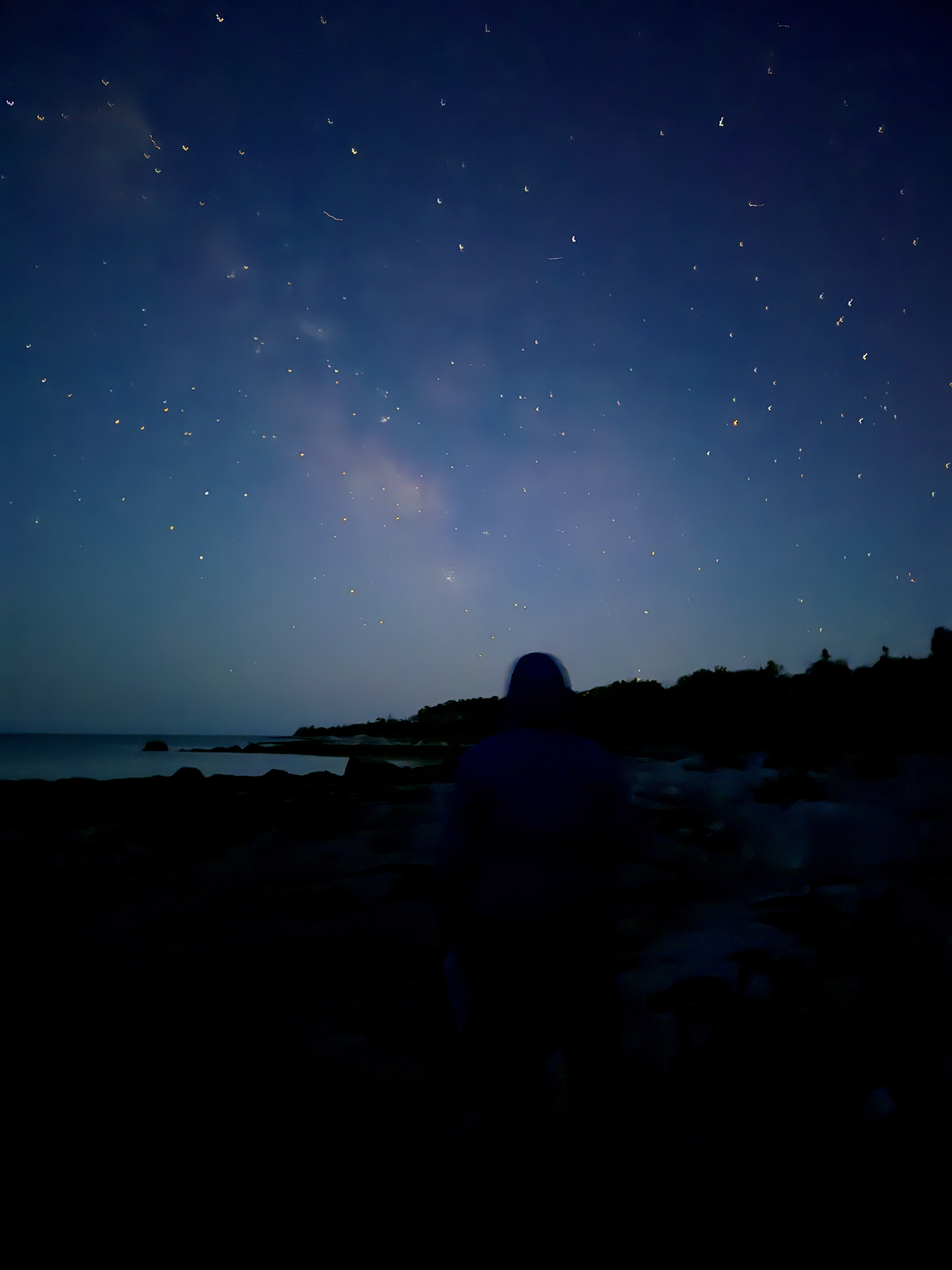 |
One of my goals this evening was to time when the three stars of the Summer triangle appeared - Vega, Altair and and Deneb.
9:23 PM ADT: Vega was the first star seen visually near the zenith. With binoculars, I was able to easily identify Vega to identify the double-double (ε Lyrae), the optical double δ Lyrae, and ζ Lyrae.
9:33 PM ADT: Altair appeared. Could also identify the reddish-looking Tarazed (γ Aqi) and Alshain (β Aqi).
9:34 PM ADT: Deneb became visible.
9:44 PM ADT
Knowing that both Cygnus and Aquila were now visible, I looked for the Coathanger. Four of the six stars in the straight line were seen as were 3 of the four stars in the hook.
9:47 PM ADT
I just happened to turn around to talk to Jerry to visually discover the Big Dipper. Using the 3 stars in its handle, I "arced to Arcturus" in Böotes then "spiked to Spica" in Virgo.
10:00 - 10:12 PM ADT
Amazing! I started viewing this constellation when part of its tail was still behind the tree line but by 10:12 PM, all of the stars of Scorpius were well above it and could easily be identified. The red of Antares stood out. All of the other bright stars of the constellation, from its claws to the tip of its tail were very easily identified. Even ω1 and ω2 Scorpii near Graffias were easily seen with binoculars and hinted at naked eye. For some reason, I didn't look for M4 - go figure - or if I did, I didn't note that it was seen.
10:07 PM ADT
While noting the stars in Scorpius, the Teapot asterism was quite evident in the southern sky. I followed the base of the pot to locate M7 (Ptolemy's Cluster), although it was visible averted vision. From the spout, I found M8. I then went to the lid to find what I think is easy to find - M22.
10:17 PM ADT
All 5 stars of Cassiopeia were visible.
10:20 - 10:26 PM ADT
M6 (Butterfly Nebula) and M7 (ptolemy's Cluster) were viewed with binoculars; they were in the same FOV. I looked further up the Milky way's dark lane to find a semi-circle of stars near Scutum using naked eye; ε Sct was part of the semi-circle. At the 'top' of the curve, using my binoculars, I could see the upside-down backwards golf club and the small grey fuzzy golf ball aka M 11 (Wild Duck Cluster).
10:28 PM ADT
The stars of Delphinus could be identified. The dark lanes of the Milky Way were quite evident at this hour.
10:42 PM ADT
The Square of Pegasus was located and the constellation Andromeda consequently identified. The two lines of stars were quickly seen. One line included δ Peg with π Peg to its north and ε Peg to its south. Going further out from Alpheratz to Mirach (β Peg), I went up towards μ Peg and ν Peg to discover the Andromeda Galaxy with its brighter core and broad elliptical shape.
SQM: 21.42
Temperature: 13° C
11:03 PM ADT
Algol became visible above the horizon below Cassiopeia. Mirfak with it surrounding Melotte 20 was visible adjacent to a tall thin tree at the end of the beach.
11:05 PM ADT
Capricornus was viewed with delight. I always remember Dave's explanation of Quinn Smith renaming this "Orion's underpants" - always makes me smile. The stars that weren't obscured by cloud were Prima Algedi (α1 Cap), Algedi Secundi (α2 Cap), Dabih (β Cap), Deneb Algedi (δ Cap), Nashira, ω Cap, θ Cap, and ψ Cap.
SQM: 21.60
Temperature: 13° C
Star Map - Aquarius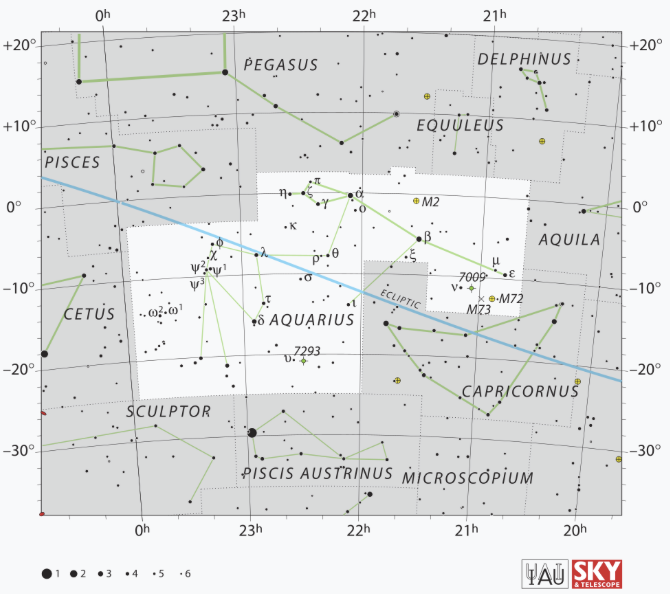 |
11:12 - 11:30 PM ADT I did not realize at the time that the vase or water-jar was attached to the constellation. I was just happy to see this much of the constellation for now. It was during the time identifying the tars that I also located and saw M2 for the first time, the globular cluster located at 10 o'clock to Sadalsuud. |