Constellations: Boötes, Cepheus, Cygnus, Hercules, Lyra, Ophiuchus, Scorpius
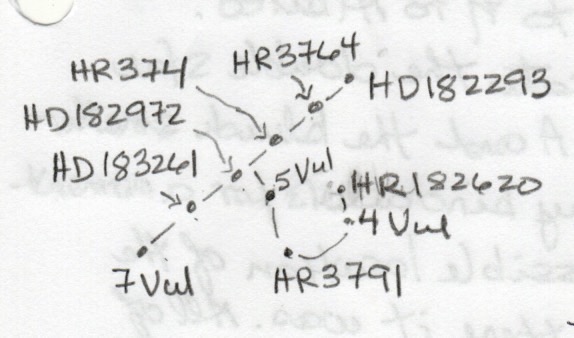
Asterism: Coathanger/Collinder 399/Brocchi's Cluster
Minor Planet: Ceres
Planets: Jupiter (in Libra), Venus (in Taurus)
Messier Objects: M13 (Hercules Globular Cluster)
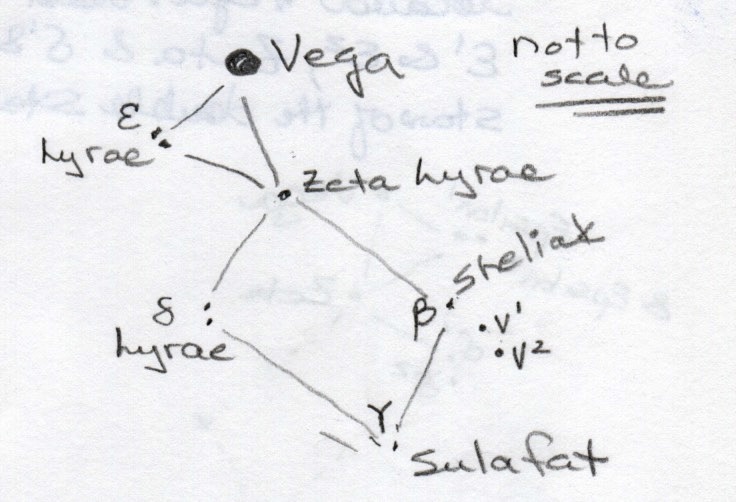
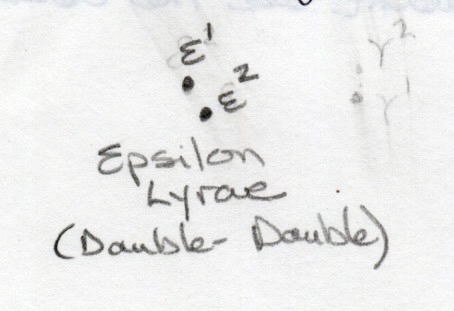
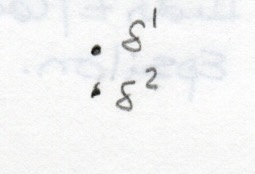
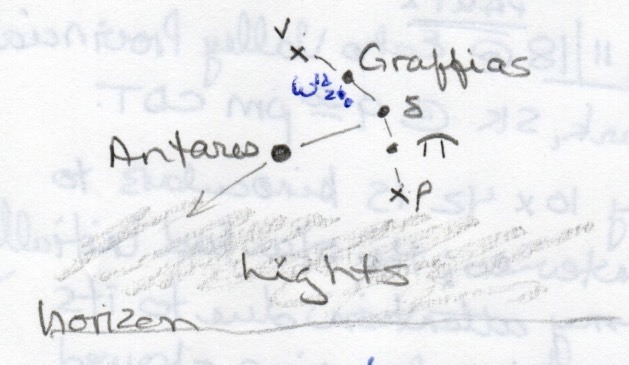
Double Stars: ε1 & ε2 Lyrae; δ1 & δ2; Lyrae, ν1 & ν2 Lyrae; ω1 and & ω2 in Scorpius
Identified, Not Observed: Arcturus, Castor, Cassiopeia, Pollux, Spica
Not found: M47 - My attempts to find this object were thwarted by the tree line on the S-SW area of our property. Sirius could be seen but it was very low on the horizon.
Location: Home
Date: 2018-05-14/15
Time: 9:00 PM - 1:30 AM ADT
Instrument: Visual + Binoculars 10x42 IS + 10" Meade SCT with 10 mm Speers-Waler
Transparency: Fair (2) - Poor (1)
Seeing: Fair (2) - Poor (1)
Temperature: 13º C - 8º C
Jerry and I were in the back yard - me observing and him astroimaging. No wind or clouds bu there're may have been a very light haze. Dew is settling on surfaces. Visibility and transparency were not as good as a couple of nights ago.
|
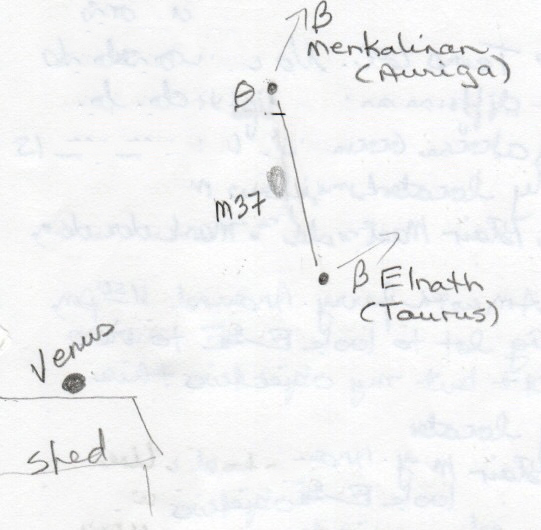
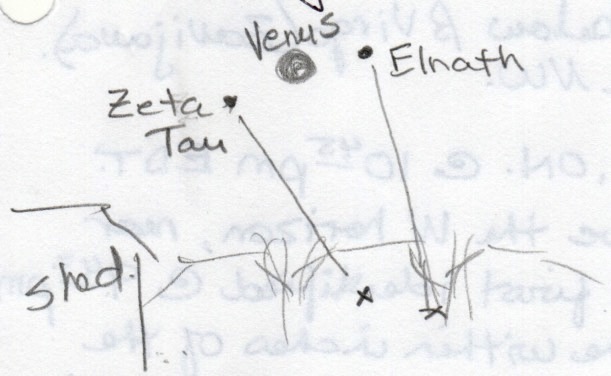
Venus Venus was very bright in the SW sky at about 25º to 30º above the horizon. It has changed position from the previous night's location. It has moved quite a bit from the Ain-Elnath line to being between ζ Tau and Elnath. Also tried using the Venus-Capella line to locate M37. Failed. |
 |
||
|
|
M37 / NGC 2099 Could make out all of Auriga's stars and I knew that M37 was west of the line formed by theta Aur and beta Aur. Could not see it visually. Using binoculars, I put Venus at 7 o'clock in my FOV which put the top of the neighbour's clothesline at the top of the FOV. I went almost straight up from there but couldn't see the open cluster. Will try earlier in the evening next time when Auriga isn't setting and, when higher, will make star-hopping a lot easier - especially if observing conditions improve. |
||
|
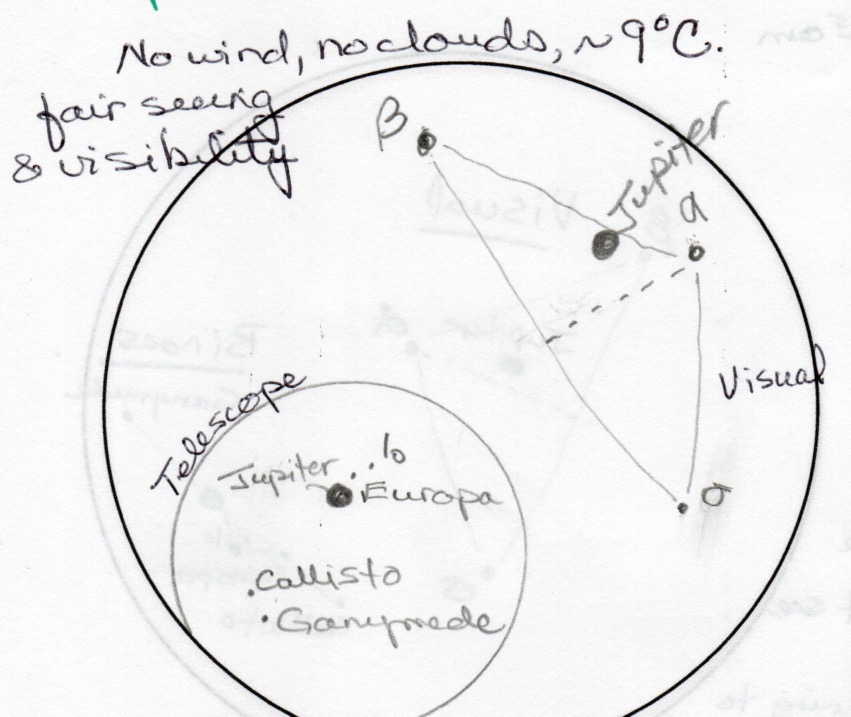
Jupiter Libra was almost on her side in the southeast sky. Jupiter was located very close to the line between α and β Librae as compared to May 8/9, 2018. I used binoculars to see the moons - only saw 3 (Callisto, Europa and Ganymede). I guessed that Jupiter was bright enough to hide Io, the one closest. Then Jerry set up the telescope to look at Jupiter. This confirmed my binocular view but also provided a view of Io. |
|
||
|
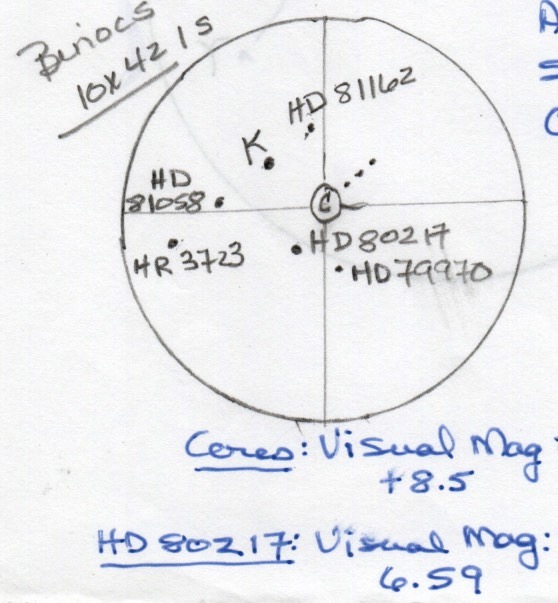
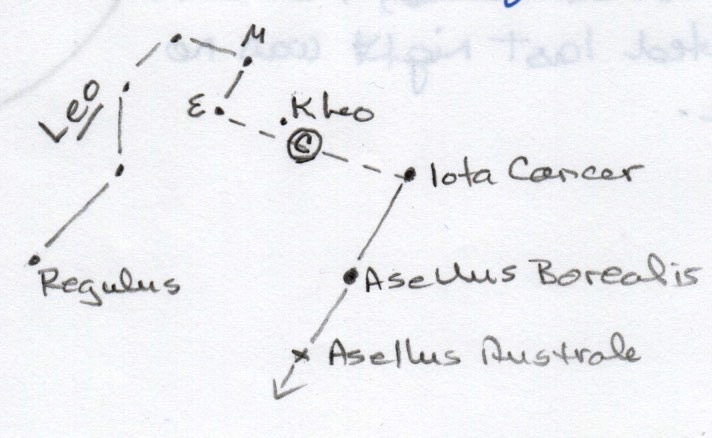
Ceres (Minor Planet) I used ε Leonis and μ Leonis to locate κ Leonis. Cancer took some staring for a few minutes so did find ι and Asellus Borealis. Using an imaginary line between ε Leonis and ι Cancer, I confirmed κ Leonis. Ceres, when centred in my FOV, was at 5 o'clock to κ Leonis but wasn't as bright. Averted vision was sometimes required to see Ceres. It had helped to study the star charts in advance of this search! |
|
||
| Boötes Time: 12:03 AM ADT Equipment: Visual + Binoculars S&T Chart Reference: 42, 44, 53, 55 Arcturus was located high above Venus. I took my time to find all the stars of the constellation because of the less than great seeing and transparency. The part I couldn't locate was the 'arm' from Seginus to what I call the 'Asellis Triangle' - Asellus Primus, Asellus Secundus and Asellus Tertius. |
|||
| Lyra Time: 12:05 AM ADT Equipment: Binoculars S&T Chart Reference: 63 Saw Vega high in the E-SE sky and could faintly make out some of the stars in constellation. Used my binoculars to find two sets of double stars - ε Lyrae and δ Lyra. Success! |
|
||
|
Scorpius On going through my scratch notes, I realized I had also seen ω1 and ω2 that were very bright adjacent to Graffias. |
 |
||
| Cygnus Time: 12:20 AM ADT Equipment: Visual + Binoculars S&T Chart Reference: 62, 73, H While looking at Hercules about 20 minutes earlier, I noticed Deneb but ignored it for the time being. Being determined, I located the swan's stars despite the sky conditions. Certainly her wings took a bit of effort and not quite sure if I actually saw ι2 and ζ or just imagined them. Seeing Albireo, I easily located the Coathanger. |
|||
|
Coathanger / Collinder 399 / Brocchi's Cluster |
 |
||
|
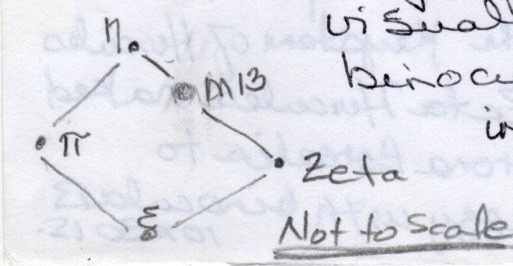
Hercules & M13 I found M13 easily enough in the same FOV of my binoculars as eta Herculis. It was circular with no clearly defined or bright stars evident. |
|
||
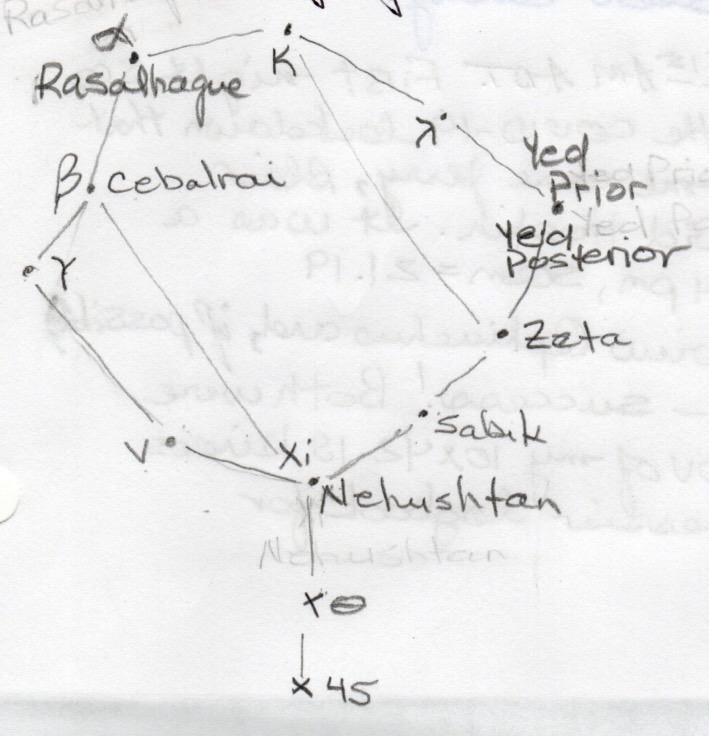 |
Ophiuchus |
||
|
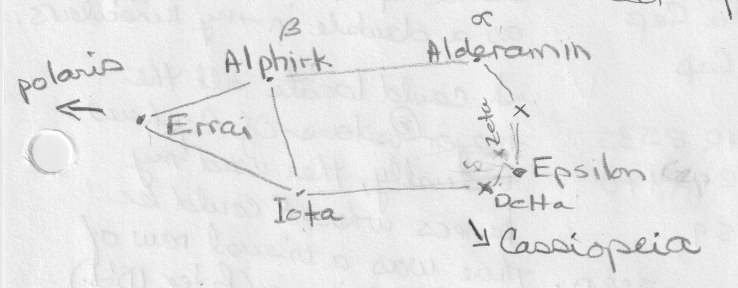
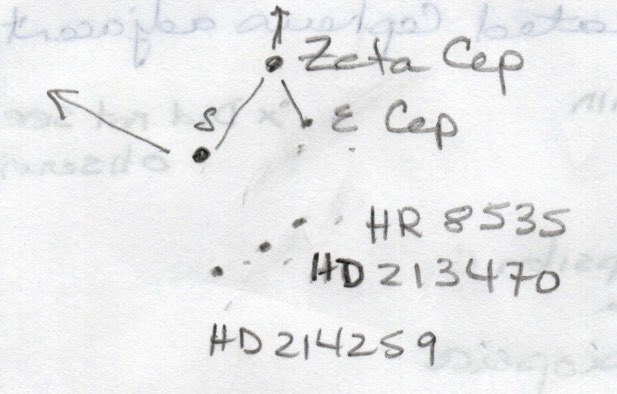
Cepheus 12:57 AM: 4:30 AM: |
|
||